Masdar secures Angola solar pact under Royal Sable plan
Hyphen Web Desk
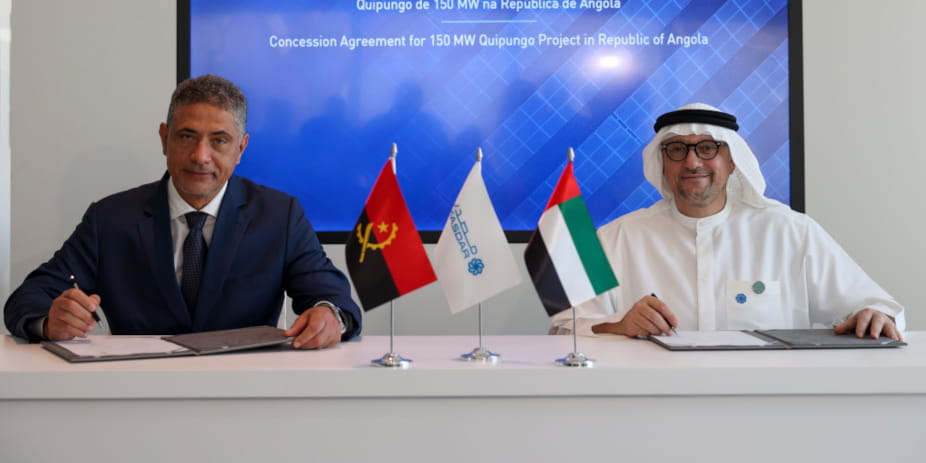 Abu Dhabi Future Energy Company PJSC – Masdar has signed a long-term power purchase agreement for a 150-megawatt solar photovoltaic project in Angola, marking its first contracted power deal in the country and extending the company’s African portfolio at a time when regional governments are accelerating grid expansion and energy diversification.
The agreement covers the Quipungo Solar PV project, located in Angola’s southern region, and was executed with the state-owned transmission and offtake entity Rede Nacional de Transporte de Electricidade. The deal positions Masdar as a new entrant in Angola’s utility-scale renewable sector, which has been drawing growing international interest amid efforts to reduce dependence on hydropower and diesel generation.
Quipungo is the first site to be contracted under Project Royal Sable, a planned 500-megawatt renewable energy programme spanning three locations across southern Angola. The programme is designed to strengthen grid stability in provinces that have faced power constraints, while supporting national targets to expand electricity access and integrate more non-fossil capacity into the energy mix.
The PPA was signed on behalf of Masdar by Abdulaziz Alobadli, the company’s chief operating officer, and on behalf of Rede Nacional de Transporte de Electricidade by Mauro Hernany Ferrerira Martins, executive director for market operations and regulatory affairs. The agreement establishes the commercial framework for electricity sales from the project to the national grid once construction and commissioning are completed.
Angola has historically relied on large hydroelectric schemes along the Kwanza River basin, which account for the bulk of installed capacity. While hydropower has underpinned electricity supply for decades, variability in rainfall and rising demand from population growth and industrial activity have exposed vulnerabilities in the system. This has prompted authorities to prioritise solar and other renewables, particularly in regions distant from major hydro assets.
The Quipungo project is expected to contribute to greater resilience in the southern grid, where solar resources are among the strongest in the country. By adding utility-scale photovoltaic generation, the project aims to reduce reliance on thermal backup plants and improve supply reliability for households, agriculture, and mining operations that underpin the regional economy.
For Masdar, the Angola entry aligns with a broader strategy to expand across emerging markets with high renewable potential and supportive policy frameworks. The company has built a significant presence in Africa through projects in countries including Egypt, Morocco, and Senegal, combining equity investment with long-term offtake arrangements to mitigate market risk. Executives have consistently highlighted Africa as a priority growth region due to its demand outlook and decarbonisation needs.
Project Royal Sable reflects Angola’s evolving approach to attracting foreign capital into its power sector. Over the past several years, authorities have worked to reform procurement processes, standardise contractual structures, and strengthen the role of the national transmission operator as a creditworthy offtaker. The use of PPAs with international developers is intended to accelerate capacity additions without overburdening public finances.
Industry analysts note that solar projects of this scale can be deployed faster than large hydro or gas plants, offering near-term relief to constrained grids. They also point to the importance of transmission investment to ensure new generation can be absorbed efficiently, an issue Royal Sable seeks to address by focusing on sites that reinforce the southern network.
The agreement also carries broader economic implications. Construction of the Quipungo facility is expected to create local employment opportunities and stimulate demand for services and materials, while long-term operation contributes to skills development in the renewable energy sector. Such projects are increasingly viewed by policymakers as tools for regional development alongside their climate benefits.
Labels:
#Syndication
Share:
