Shell’s war profit fuels climate backlash
Hyphen Web Desk
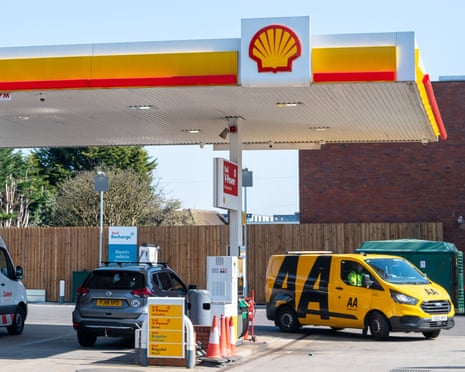 Climate campaigners have accused Shell of turning wartime turmoil into a fossil-fuel windfall after the group reported first-quarter adjusted earnings of $6.9bn, lifted by higher oil and gas prices, stronger trading and improved refining margins.
The London-listed energy major’s profit was more than double the $3.26bn recorded in the final quarter of last year and above market expectations of about $6.36bn. The figures have sharpened scrutiny of the oil and gas sector’s ability to benefit from geopolitical shocks while households and businesses absorb the cost of higher energy bills, transport fuel and inflationary pressure.
Shell said its performance reflected operational discipline during a quarter marked by severe disruption in global energy markets. Chief executive Wael Sawan framed the results as evidence of the company’s resilience, saying Shell had delivered strong results while focusing on performance and the safety of its people. The company also announced a $3bn share buyback programme for the next three months and raised its dividend by 5 per cent to $0.3906 a share.
The earnings have drawn criticism from climate groups who argue that the company is rewarding shareholders from a crisis that has intensified the economic burden on consumers and underlined the risks of continued dependence on fossil fuels. Their central argument is that war-driven price spikes should not become a profit engine for companies whose core products are accelerating climate change.
Oil prices surged during the US-Israel conflict with Iran as supply risks mounted around the Gulf and the Strait of Hormuz, one of the world’s most important energy shipping routes. The jump in crude prices boosted the trading operations of major producers, even as some companies faced operational disruption in the region. Prices later eased on expectations that diplomatic efforts could reduce immediate supply fears, but the episode exposed how quickly geopolitical shocks can feed into global energy costs.
Shell’s own outlook showed that the conflict was not an unqualified gain. The company warned that second-quarter volumes would be hit by Middle East disruption, including damage affecting Qatar-linked operations. Integrated gas production is expected to fall to between 580,000 and 640,000 barrels of oil equivalent per day, compared with 909,000 in the first quarter. Upstream output is forecast at between 1.62m and 1.82m barrels of oil equivalent per day, down from 1.84m.
Even so, campaigners said the scale of the profit and the continuation of shareholder payouts illustrated a deeper imbalance in the energy system. They have renewed calls for stronger windfall taxes on excess fossil-fuel profits, with proceeds directed towards household support, public transport, energy efficiency, climate adaptation and renewable power. The demand echoes arguments made after the surge in oil and gas prices following Russia’s full-scale invasion of Ukraine in 2022, when energy majors posted record earnings while many governments subsidised consumer bills.
The controversy also lands as Shell continues to face pressure over its climate strategy. The company has maintained that oil and gas will remain essential to energy security while it invests selectively in lower-carbon businesses. Its critics say the pace and scale of that transition remain inadequate, particularly after earlier moves to narrow parts of its clean-energy ambitions and prioritise higher-return oil and gas assets. Shell’s Renewables and Energy Solutions division contributed adjusted earnings of $348m in the first quarter, far below the returns generated by upstream, integrated gas, marketing and chemicals.
The broader market context has strengthened campaigners’ case that volatility itself has become a profitable feature for large trading houses inside the oil majors. Shell’s trading operations are among the most sophisticated in the industry, allowing the company to capture margins when prices swing sharply. That capability is commercially valuable, but it also places the group at the centre of a political dispute over whether private energy profits should rise so sharply from instability that raises costs for the wider economy.
Labels:
#Syndication
Share:
