Solar shift powers Dahbashi Dubai base
Hyphen Web Desk
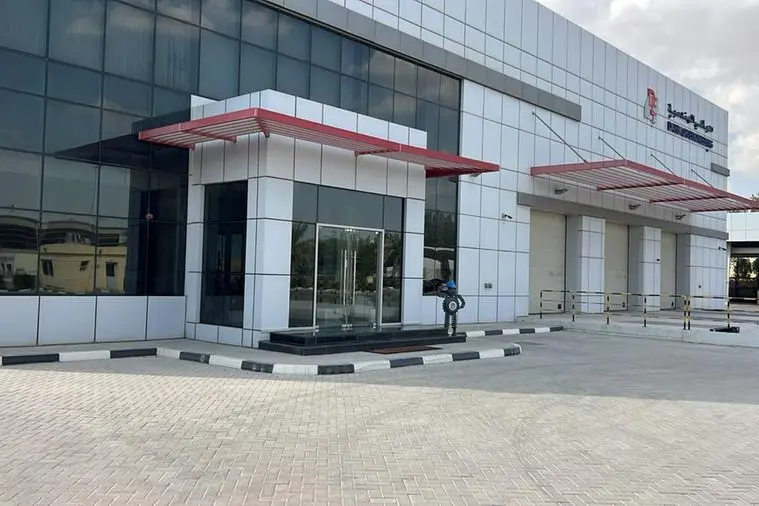 Dahbashi Engineering has moved its headquarters in Dubai Industrial City onto on-grid solar power, marking a sustainability push by a company better known in the Gulf for heavy machinery spare parts, service operations and industrial battery solutions. The company said the installation is expected to meet about half of the site’s annual electricity demand and cut operating costs by roughly 30 per cent under Dubai’s Shams Dubai net-metering framework.
 The move places Dahbashi among a widening group of industrial and commercial operators in Dubai turning to rooftop and on-site solar as power costs, decarbonisation targets and investor scrutiny reshape business decisions. Under the Shams Dubai scheme run by Dubai Electricity and Water Authority, building owners can install photovoltaic panels, use the electricity on site and export surplus power to the grid, with accounts settled through an offset mechanism.
Saleem Ahmed, co-founder and chief executive of Dahbashi Engineering, described the shift as a long-term operational decision aimed at improving resilience as well as lowering the company’s carbon footprint. The company, founded in 1985, operates from Dubai Industrial City and supplies spare parts and repair services for heavy earthmoving equipment while also providing motive and reserve power systems for industrial customers across the Gulf.
That industrial profile matters because energy use in workshops, warehousing and servicing facilities can be substantial, particularly in climate-controlled environments and sites with high daytime demand. Companies in such sectors have become prime candidates for rooftop solar because their consumption peaks often align with solar generation hours, improving the economics of self-consumption. Dahbashi’s headquarters sits inside one of Dubai’s main manufacturing and logistics hubs, where operators are being encouraged to combine efficiency measures with cleaner power sources.
Dubai Industrial City has spent years positioning itself as a base for advanced and more resource-efficient manufacturing, offering proximity to Jebel Ali Port, Al Maktoum International Airport and key freight corridors. For companies operating in that ecosystem, clean-energy adoption is becoming less of a branding exercise and more of a competitive tool, especially where clients increasingly examine supply chains for emissions and energy performance.
The wider policy backdrop is also pushing in the same direction. Dubai’s clean-energy strategy calls for 75 per cent of the emirate’s energy requirements to come from clean sources by 2050, a target that has driven support for utility-scale solar as well as distributed generation on commercial and industrial buildings. The Shams Dubai programme has become one of the clearest channels through which private firms can plug into that transition without waiting for large, centralised projects to deliver all the change.
For Dahbashi, the solar shift also fits the nature of a business that already sells energy-related systems alongside machinery support. Its public company profile emphasises industrial battery solutions, standby power applications and technical services, which gives the firm a closer relationship with energy infrastructure than a conventional parts distributor might have. That does not automatically make a solar rollout easy, but it suggests management has both a commercial and technical incentive to present the headquarters project as more than a symbolic gesture.
The economics are likely to be watched closely by peers. A projected 30 per cent reduction in operating costs is a strong claim, and one that will draw attention from manufacturers, logistics operators and workshop-based firms facing margin pressure. Whether other companies can replicate those savings will depend on roof area, load patterns, financing costs and connection arrangements, but the message is clear: in Dubai’s industrial belt, self-generation is becoming easier to justify in boardrooms.
The timing is notable because the UAE’s broader solar market continues to expand, from mega-projects in Abu Dhabi to distributed installations tied to commercial sites in Dubai. Large-scale projects such as the Mohammed bin Rashid Al Maktoum Solar Park remain central to the emirate’s energy plans, but smaller behind-the-meter systems are increasingly important because they bring private capital into the transition and reduce demand on the grid during business hours.
Labels:
#Syndication
Share:
